

Purple Scrubs Explained: NHS Uniform Colours and Where to Buy in the UK
Walk onto any busy NHS ward and you notice the colours before you read a single name badge. On most maternity units, purple scrubs mean a midwife is on shift. Here is what purple signals across the NHS, and how to choose the right shade and fit.
 Men's Wild Plum
 Women's Wild Plum
Walk onto any busy NHS ward and you will notice something before you read a single name badge: the colours. And purple? On most maternity units in the UK, purple scrubs mean a midwife is on shift.
But the story behind purple scrubs is more layered than that. The shade is not standardised across the NHS, the role it signals can shift from Trust to Trust, and finding the right purple scrubs set for your ward is not always straightforward. This guide walks through what purple scrubs mean in the NHS, what to look for when you are buying, and where to buy scrubs online in the UK, including a closer look at On Call London's Wild Plum range.
NHS uniform policy: the basics
Here is the thing that catches most new starters out: there is no single national NHS uniform. Each Trust sets its own dress code, which is why the purple worn on one maternity ward can look quite different from the one across town.
There has been movement toward standardisation. NHS England has published guidance recommending a national uniform colour scheme, with the aim of making it easier for patients to identify staff wherever they are treated. You can read it in the NHS national healthcare uniform guidance. Adoption has been gradual and voluntary, though, so the NHS purple uniform on one maternity ward may still look different from the one across town.
Uniform policies also intersect with infection prevention. Professional bodies set out clear expectations around laundering, bare below the elbows, and safe uniform practice, worth reading in the RCN's infection prevention and control guidance.
The practical takeaway. Always check your Trust's dress code before buying your own scrubs. Your practice educator, ward manager, or the staff intranet will have the exact specification, right down to the shade.
What do purple scrubs mean in the NHS?
Across the majority of NHS Trusts, purple scrubs are worn by midwives. It is the most recognisable purple nurse uniform on any maternity unit, and for many expectant parents it has become visual shorthand for the person who is going to help deliver their baby. The Royal College of Midwives publishes plenty of context on the profession's identity and standards, including material on the midwifery role that reinforces why clear visual identification matters on a busy maternity unit.
But midwives are not the only staff who might wear purple medical scrubs. Depending on the Trust, purple can also signify a range of specialist roles:
- Bereavement midwives and pregnancy loss specialists, sometimes in a slightly different shade or with an identifying trim.
- Chaplaincy and pastoral care teams, particularly where clinical-adjacent roles are given their own colour.
- Senior matrons, in a handful of Trusts that use purple for senior nursing leadership.
- Play specialists on paediatric wards.
- Dementia leads and specialist nurses in some older-adult services.
Regional variation matters here. A midwife in a Manchester teaching hospital might wear a completely different purple to one in a London Trust, and both might differ from the purple scrubs NHS staff wear in a rural district general. If you are moving Trusts or starting a new placement, do not assume your existing scrubs will pass the dress code, check first. For workforce leads aligning a Trust's approach with the national picture, the uniforms and workwear guidance for NHS employers is a useful reference.
Shades of purple: which one does your Trust wear?
One of the most common mistakes new starters make is buying scrubs in the wrong shade of purple. Purple covers a wide spectrum, and the difference between violet, lilac, plum, and hospital purple is significant enough that turning up in the wrong one can mean being sent home to change.
The main shades of purple
Before you order, get a physical colour reference wherever possible. Ask a colleague on your ward to send you a photo in natural light, check the Trust intranet for a colour code, or ask your practice educator. A screen-accurate photo beats a guessed shade every time.
Purple scrubs for women
Women's purple scrubs need to do two things at once: fit properly across a range of body shapes, and stand up to the physical demands of a full shift. On Call London's Wild Plum range covers the main pieces you will want in your rotation:
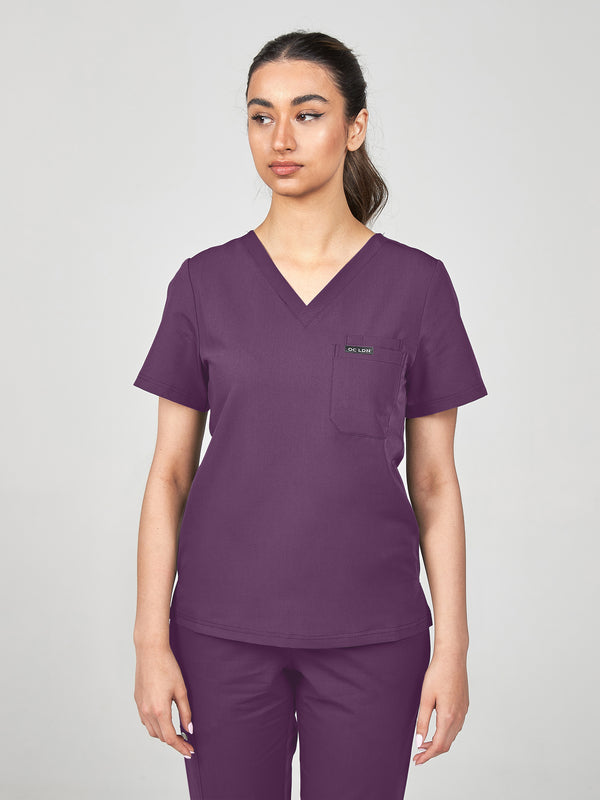
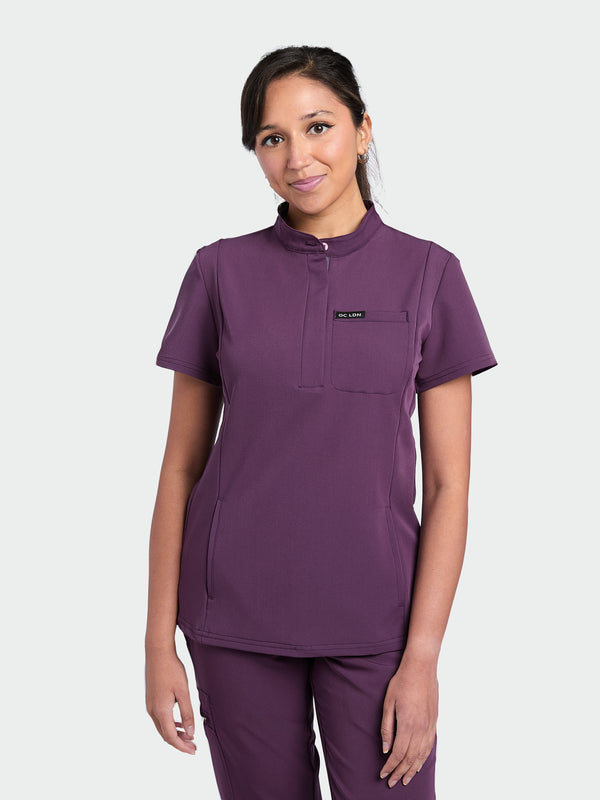
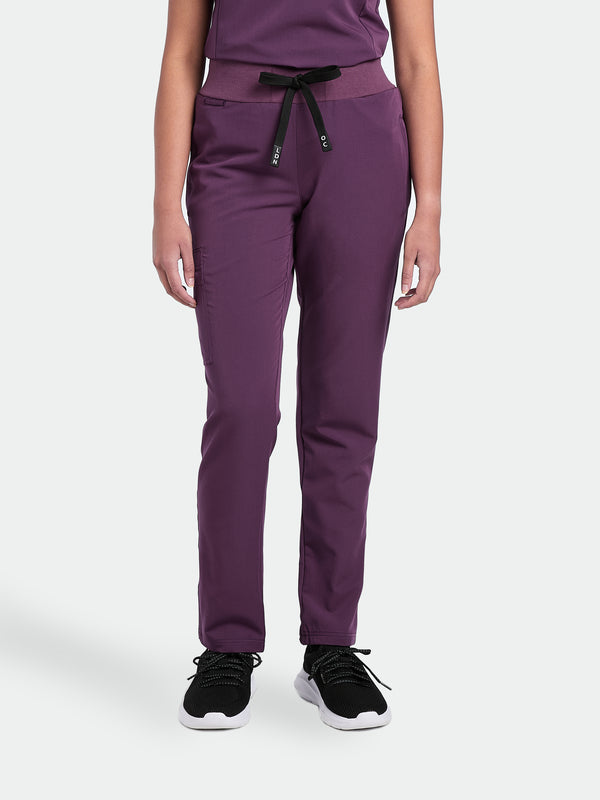
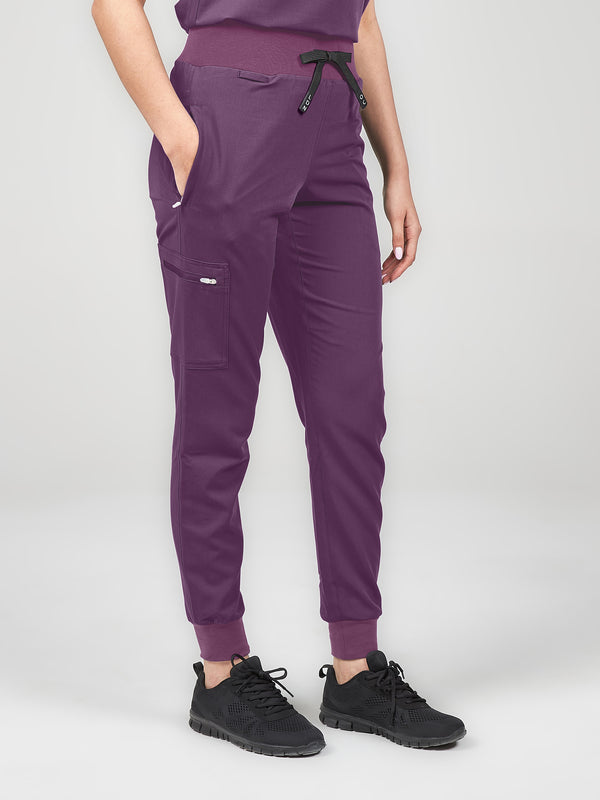
If you are shopping for women's scrubs UK-wide, look for tailored waists, generous shoulder movement, and hip room that suits a rotating shift pattern. Ladies scrubs cut with a slight taper at the waist look neater under a fleece or cardigan, and a good jogger cut is easy to overlook for postnatal and antenatal work where you are moving between rooms constantly. A matching purple scrubs set, top and trousers or top and joggers, is almost always more cost-effective than mixing brands, and the shades match perfectly across pieces.
Purple scrubs for men
Men's purple scrubs have moved a long way from the boxy, unisex cuts of a decade ago. The Wild Plum range also includes matching pieces for men:
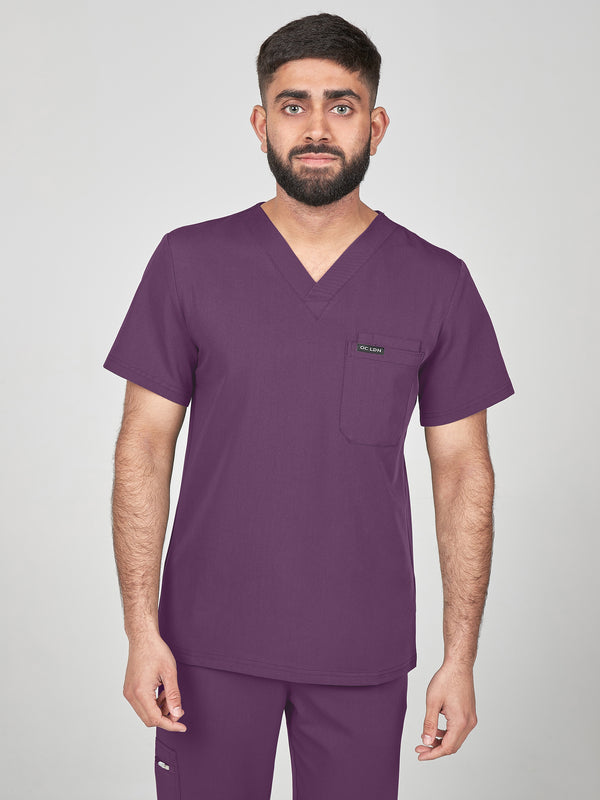
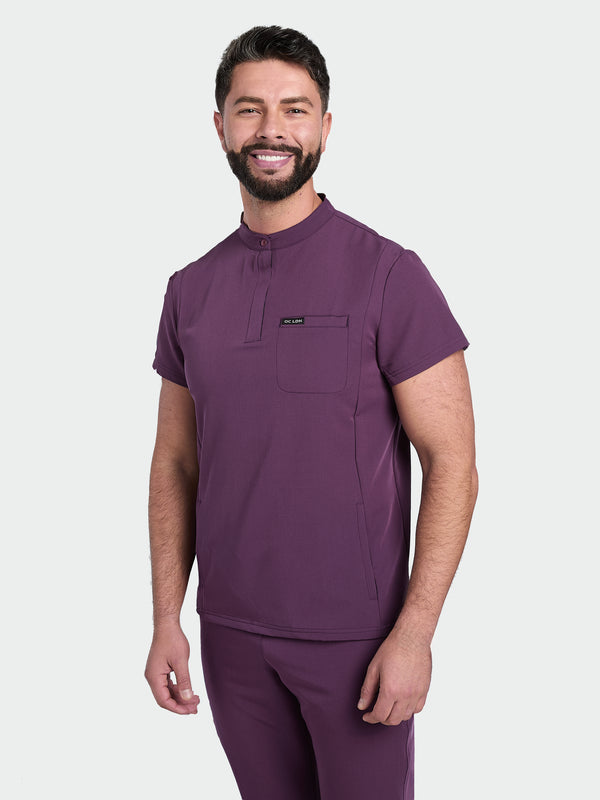
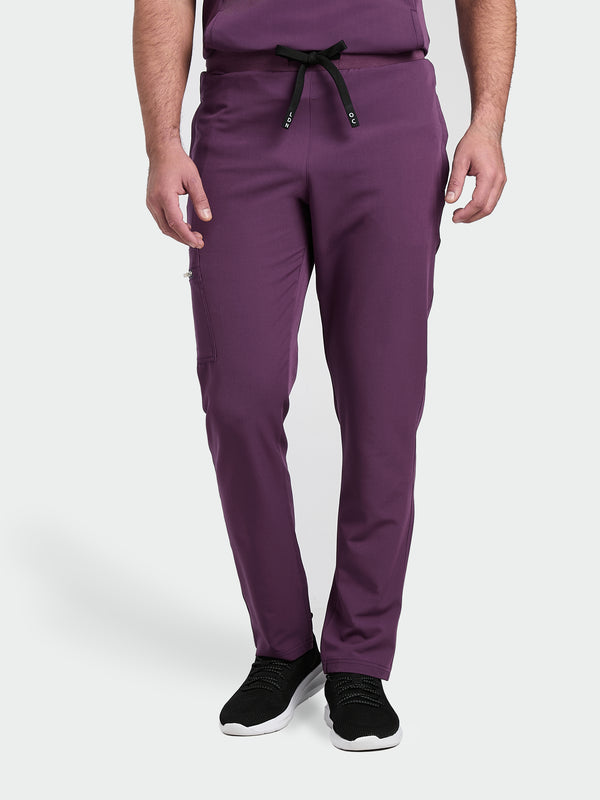
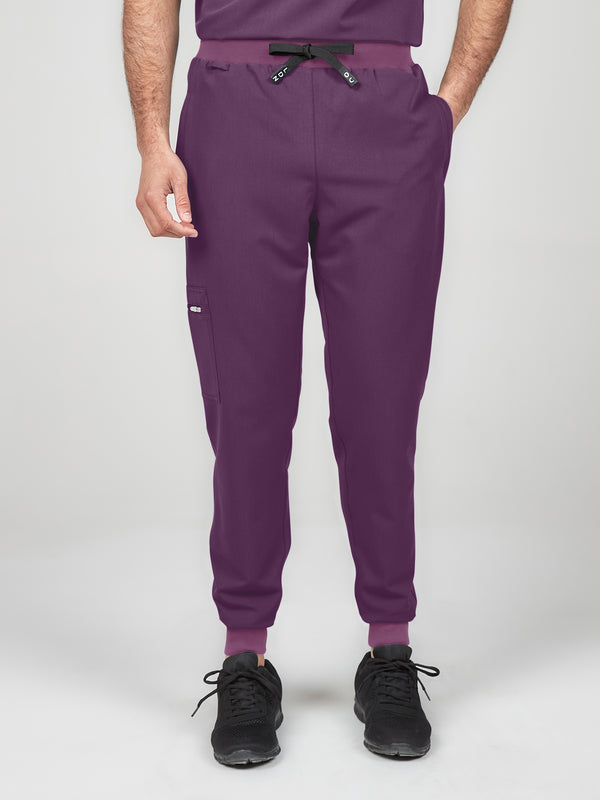
For men's scrubs UK buyers, the fit details matter. Male scrubs cut with proper chest and shoulder proportions sit better under a stethoscope and do not ride up when you lean over a bed. Medical scrubs for men should give full arm movement without pulling across the back, and a modern cut avoids the sack-like silhouette that older NHS-issue uniforms are known for. A matching men's scrubs set is the neatest way to build your rotation, and if you just need to replace a worn-out top, men's scrub tops are sold separately. Buy at least two full sets so one can be washing while the other is on shift.
Fabric, fit and features to look for
Beyond colour, the fabric and construction of your scrubs make an enormous difference to how you feel at hour eleven of a twelve-hour shift.
Fabric matters. Traditional poly-cotton is durable and holds up to 60C laundering, but it does not move with you. Modern stretch fabrics, usually a poly-cotton-elastane blend with four-way stretch, feel dramatically better through a long day. Look for a mid-weight fabric that holds its shape without becoming heavy.
On the compliance side, UK Trusts almost universally require bare below the elbows, laundering at 60C, and no external branding on some wards. These are grounded in infection prevention standards. The NICE guideline on healthcare-associated infection prevention and control is the underlying reference most Trusts build their uniform policies around, and NHS England's PPE guidance for healthcare is another useful pointer for anyone in a workforce or infection control role.
On Call London build their range around three principles worth using as a benchmark when you compare brands:
Engineered for long shifts
Stretch where you need it, reinforced seams where they take strain, and a fabric weight that does not sag after repeated washes.
Elevated professional style
Contemporary cuts that read as intentional rather than institutional, and look sharp walking into a patient interaction.
Smart utility, built in
Four-way stretch, zipped pockets for phones and personal items, and dedicated bleep holders. Details, not gimmicks.
Where to buy purple scrubs in the UK
If you are wondering where to buy scrubs in the UK, you have a few routes:
- Trust-supplied uniforms. Always the first port of call. Many Trusts provide scrubs free of charge to clinical staff. Even if you plan to buy extra pairs privately, wear the Trust-issued ones first to confirm the shade.
- On Call London. A UK-based scrubs shop offering the full Wild Plum purple range for women and men, including matching sets in classic V-neck and mandarin collar styles. A good pick for anyone who wants affordable medical scrubs without dropping to the flimsy fabrics at the very bottom of the market, whether you want to buy nursing scrubs online or need a medical scrubs shop midwives actually recommend.
- Other established suppliers. Several long-standing uniform suppliers have kitted out NHS Trusts for years. They are reliable but often lean toward more traditional cuts, which suits you if you want a straightforward match to a long-standing Trust specification.
- Online marketplaces. General marketplaces are where most cheap-scrubs searches end up. You can find bargains, but shade consistency, fabric quality, and Trust approval are all risks. Order one set first and check it against your Trust's specification before committing to a full rotation.
If you have searched for a scrub store close to you and come up short, you are not alone. Dedicated brick-and-mortar scrubs shops are rare in the UK, which is why buying online has become the default.
Find your Wild Plum set
The same plum, cut for men and women. A scrub top and matching trousers or joggers make a full set, in classic V-neck or mandarin collar.
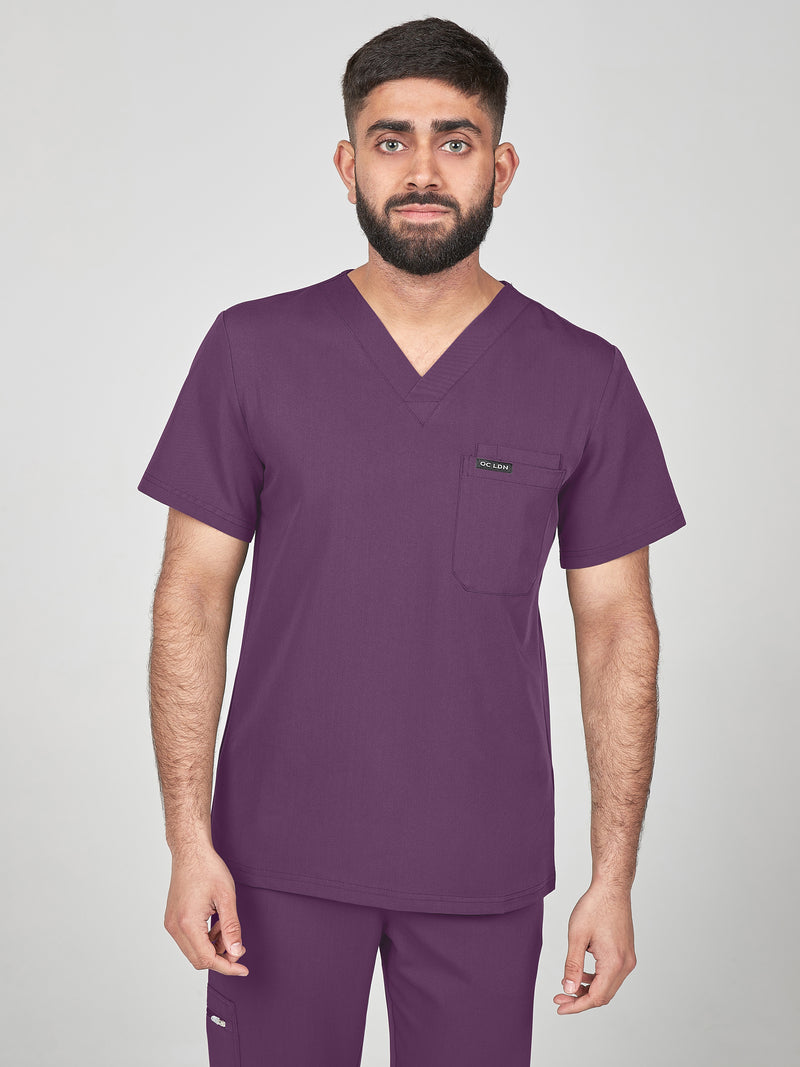
Purple scrubs for men
V-neck or mandarin, with matching trousers or joggers for a full set.
Men's top Joggers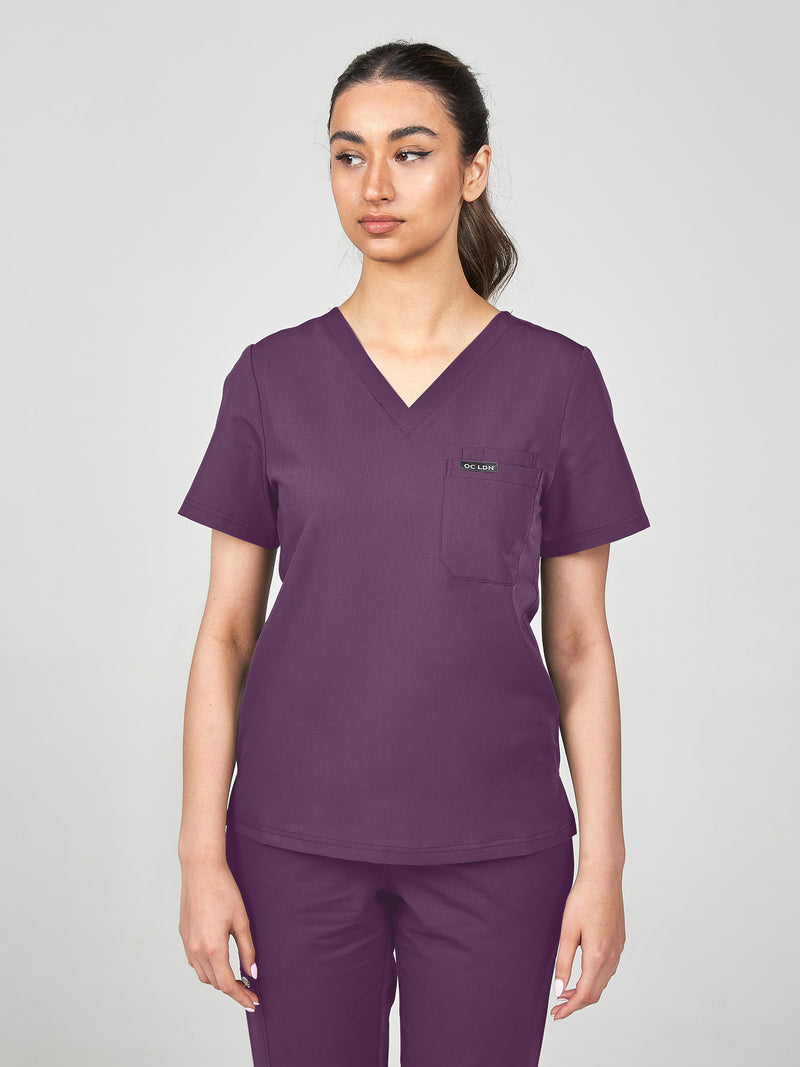
Purple scrubs for women
V-neck or mandarin, with matching trousers or joggers to build a set.
Women's top JoggersTips before you buy
- Confirm your Trust's exact shade of purple before ordering. A photo comparison with a colleague in natural light beats any product description.
- Buy at least two full sets so you always have a clean pair ready. Three is better if you work more than three shifts a week.
- Check the returns policy. Sizing varies between brands, and a supplier that accepts returns on unworn, unwashed scrubs is worth paying slightly more for.
- Choose a matching purple scrubs set rather than mixing brands. Purples that look identical online often differ noticeably in person.
- Act quickly on popular sizes. Several pieces in the Wild Plum range sell out regularly, so if you find your size in stock, do not wait.
Frequently asked questions
What do purple scrubs mean in the NHS?
Across most Trusts, purple scrubs identify midwives on maternity units. Depending on the Trust, purple can also mark bereavement midwives, chaplaincy and pastoral care teams, senior matrons, play specialists, or some specialist nurses. There is no single national rule, so it varies Trust by Trust.
Do all NHS midwives wear purple?
Not always. Purple is the most common midwife colour, but each Trust sets its own dress code and shade, so some midwives wear a different colour entirely. Always check your Trust's policy before buying.
What shade of purple do NHS midwives wear?
It varies. Common shades include hospital purple, darker purples, and plum tones. Get a colour reference from your ward before ordering, as the same garment can read differently on screen than in person.
Where can I buy purple scrubs in the UK?
On Call London offers the Wild Plum purple range for men and women, including matching sets in V-neck and mandarin styles. You can view the range on the Wild Plum collection page.
Final thoughts
Purple scrubs are one of the most recognisable colours in the NHS, and for good reason. They signal midwifery care to millions of expectant parents every year, along with a range of specialist roles that vary Trust by Trust. Getting the right shade, the right fit, and the right supplier makes a bigger difference than most new starters realise.
If you are building your first set of purple medical scrubs or replacing a tired rotation, On Call London's Wild Plum range is a solid starting point, with matching pieces for women and men and both classic and mandarin collar options. Whatever you choose, check your Trust's dress code first, buy at least two sets, and look for the details, stretch fabric, functional pockets, and cuts designed for real clinical work, that make the difference between scrubs you tolerate and scrubs you actually like putting on.
- NHS Supply Chain, NHS Healthcare Uniform
- NHS England, Uniforms and workwear: guidance for NHS employers
- Royal College of Nursing, Infection prevention and control
- Royal College of Midwives
- NICE CG139, Healthcare-associated infections: prevention and control
- NHS England, Personal protective equipment (PPE)